 24/7 SUPPORT
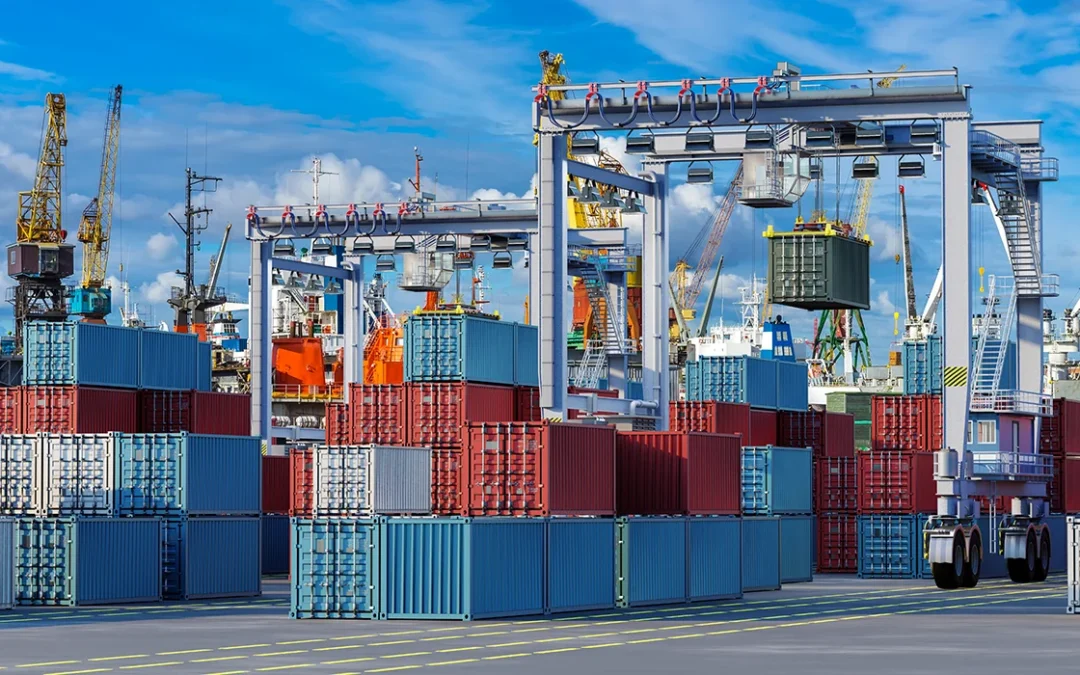
AI video analytics for supply chain security is moving from pilot project to operational standard, and the facilities that understand the possibilities are pulling ahead of those still treating cameras as merely recording devices.
Picture the loading dock at a busy distribution center on a Tuesday morning. Trucks arriving on staggered schedules, forklifts moving in multiple directions, pallets staged in the yard, dock doors cycling open and closed. It’s controlled chaos. It’s also where most facilities have the most cameras yet the least visibility.
It’s the gap that’s driving one of the most significant shifts in enterprise physical security right now. Across supply chain environments, including manufacturing plants, distribution centers, logistics hubs, warehouses, video surveillance has traditionally been deployed to document what happened after something went wrong. A shipment came up short. A forklift struck a rack. An unauthorized vehicle pulled up to a dock door at 11 p.m. The cameras were there. The footage existed. But nobody was watching in real time, and the insight came after the fact, if it came at all.
That’s changing fast. And understanding why it’s changing, and what it actually looks like in practice, is worth a serious conversation for any supply chain or operations leader responsible for security, safety, or efficiency on the floor.
How AI Video Analytics Turns Security Cameras into Operational Intelligence
The promise of AI in the supply chain has evolved from passive visibility to active intervention, and organizations utilizing AI systems can realize significant efficiency improvements while reducing reaction times from days to seconds. That framing applies to the operational side of supply chain management. It applies equally to the physical security and safety infrastructure that runs alongside it.
The cameras most facilities already have installed are capable of far more than they’re currently doing. The limiting factor isn’t the hardware; it’s the analytics layer on top of it. Warehouse leaders evaluating camera AI in 2026 are balancing worker safety, inventory protection, operational visibility, and workforce trust. The most useful platforms combine reliable event detection with configurable alerts and workflows that turn observations into practical action.
What that looks like on the ground is worth unpacking specifically, because “AI analytics” can mean a lot of things depending on who’s selling it.
AI Camera Analytics for Supply Chain: Loading Docks, Forklifts, PPE, and Damage Detection
Start with the loading dock, because that’s where the density of activity and risk is highest.
License plate recognition cameras can automatically capture and record plate information as vehicles enter or leave designated areas, creating a clearer visual record of how products move through the facility. In practice, this means a truck pulling up to your gate can be automatically scanned. In practice, this could mean that the plate is captured, cross-referenced against a list of approved carriers, and routed to the correct dock door, all without a guard manually checking credentials or a dispatcher making a phone call. The truck that belongs there gets in efficiently. The one that doesn’t trigger an alert before it reaches the door.
That same camera, pointed at a pallet coming off a truck, can inspect the load for damage, verify that it’s wrapped or packaged correctly, and flag a problem before that pallet enters your inventory. Loading dock cameras can track how long trucks spend at each bay, identifying bottlenecks and optimizing scheduling. Production line monitoring detects when workers deviate from standard procedures or when safety protocols aren’t being followed.
Move inside the facility and the use cases multiply quickly. Does a forklift belong in this aisle? Are workers wearing proper PPE in a zone that requires it? Is there a spill on the floor near a pedestrian walkway? How many times did a forklift pass through a specific area in the last hour and does that pattern suggest a congestion problem or a routing inefficiency? Relevant use cases include forklift interactions, PPE compliance, restricted areas, dock activity, shipment handling, theft prevention, and workflow analysis.
These aren’t hypothetical applications. They’re what supply chain and manufacturing facilities are deploying right now and the data they generate isn’t just useful for safety. It becomes operational intelligence that informs how a facility runs, shift by shift.
One of the most powerful capabilities is historical tracking. When a shipment arrives, the system can build a documented history of that load, including when it came off the truck, which forklift moved it, which path it took through the facility, and whether any damage was detected at any point in that journey. That kind of shipment-level audit trail is valuable for loss prevention, carrier disputes, insurance claims, and customer accountability.
Hard-Wired Analytics vs. Trainable AI: What’s the Difference and Why It Matters
Here’s a distinction worth understanding clearly before any facility starts evaluating vendors. Not all camera analytics are the same, and the difference matters significantly for what you can realistically expect from a deployment.
Enterprise camera platforms from some of our partners like Axis, Genetec, Gallagher, and Hanwha, come with built-in, hard-wired analytics that work out of the box. Motion detection, line crossing, object detection, area intrusion, loitering detection. These are reliable, consistent, and don’t require any training or customization to function. For a significant portion of supply chain monitoring use cases, they’re exactly what’s needed without any additional configuration.
Layered on top of that foundation is trainable AI. These are models that can be taught to recognize behaviors, objects, and conditions specific to your facility. A model trained to recognize your specific forklift fleet. One calibrated to detect whether an inbound pallet meets your packaging standards. One that knows the difference between a carrier who belongs in your yard and one who doesn’t. This includes PPE and safety-behavior detection across production and warehouse environments, perimeter and restricted-area intrusion detection, vehicle and license plate recognition for yard and gate management, and custom-trained detections for facility-specific risks or quality issues.
The platform that ties it together, such as the one provided by Milestone for video management and recording, or Axis, determines how well those layers communicate with each other, how searchable the footage is, and how the alerts reach the people who need to act on them. Getting the platform right matters as much as getting the cameras right. The recording infrastructure also creates the searchable history that makes shipment tracking, damage analysis, and compliance documentation possible across the entire operation.
Who Controls Your Data in an AI Camera System and How to Keep It in Your Hands
This comes up in nearly every conversation about AI analytics in physical security, and it’s the right question to ask early. When a camera system is generating continuous data about your operations, whether its vehicle movements, employee behaviors, load conditions, forklift traffic patterns, you have a legitimate interest in understanding where that data lives, who can access it, and how it’s being processed.
The honest answer is that you have more control over this than most vendors make clear upfront. Centralized data control and actionable insights are key priorities for supply chain organizations strengthening their security and operational strategy in 2026. Many facilities are choosing to route their AI analytics data to their own cloud accounts, not a vendor’s shared infrastructure, so the organization retains full ownership and control of what’s being collected and how it’s used. Others prefer fully on-premise processing, where data never leaves the facility network. Both are viable architectures, and the right one depends on your IT infrastructure, your compliance requirements, and your organizational comfort level with cloud-based systems. A
What matters is that this conversation happens before deployment, not after. A good implementation partner (like Data Link) works through the data architecture with you as part of the design process, not as an afterthought once the hardware is already specified and the contract is signed.
How to Start with AI Video Analytics: The Proof-of-Concept Approach for Supply Chain Facilities
This is one of the most important things to understand about getting started with AI analytics in a supply chain environment: you don’t need to have it all figured out before you begin. Most facilities that have successfully deployed these systems started with a specific problem they wanted to solve, not a technology they wanted to buy.
A pallet damage issue at the dock. A PPE compliance gap that kept surfacing in safety audits. A gate management process that was slow and labor-intensive. Forklift traffic patterns nobody had reliable visibility into. Any of those is a legitimate starting point. The right platform is one that can address that vand scale to address more as the operation grows.
The right approach is a proof of concept built around a single, well-defined use case. Deploy cameras in the relevant area, configure the analytics to detect what you’re looking for, and evaluate whether the system is actually surfacing the information you need. It’s also worth being clear about what AI analytics cannot do: it can only analyze what it sees. The cameras need to be positioned correctly, with the right field of view and resolution, for the analytics to work as intended. That’s why defining the use case before specifying hardware matters. The camera placement follows from what you’re trying to detect, not the other way around.
If the proof of concept delivers value, you build from there. If it surfaces gaps in the configuration or coverage, you address those before scaling. This approach also addresses the most common concern facilities raise: “We don’t have the internal expertise to manage this.” Our answer is, “You don’t need it.” The right implementation partner brings the technical depth, evaluating your use case, specifying the right hardware and analytics platform, configuring the system for your environment, and helping you interpret what the data is telling you. The facility provides the operational context. The partner (again, like Data Link) provides everything else.
AI Camera Analytics Beyond the Warehouse: Manufacturing, Healthcare, and Multi-Site Applications
Gartner identifies physical AI, integrating AI with IoT sensors for real-time operational efficiency, safety, and adaptability, as a top supply chain technology trend for 2026, with applications across manufacturing, warehousing, and transportation.
The supply chain and logistics sector is where this technology is proving itself most visibly right now, but the underlying approach applies wherever the volume of activity exceeds what human observation can reliably monitor. Manufacturing plants are applying the same camera intelligence framework to production line compliance and zone access verification, including color-coded uniform detection to ensure employees are in authorized areas. Healthcare facilities are using it to monitor patient wandering, flag when a wheelchair or piece of equipment appears somewhere it doesn’t belong, and support visitor management workflows. Distribution networks with multiple sites are using centralized video management platforms to maintain consistent safety and security standards across every location from a single interface.
The common thread across all of these environments is that the cameras already exist. The footage is already being recorded. The question is whether that footage is generating information that makes the operation safer, more efficient, and better documented, or whether it’s simply recording what nobody is watching.
Frequently Asked Questions: AI Video Analytics for Supply Chain and Manufacturing
Can AI cameras tell me how many times a forklift entered a specific area in a given hour?
Yes, this is one of the most practical operational applications of camera analytics in warehouse and manufacturing environments. By defining a zone and tracking vehicle entries, the system builds a continuous log of forklift traffic through any area. That data can be used to identify congestion patterns, optimize routing, flag unusual activity, and support operational efficiency reviews over time.
How does license plate recognition work at a warehouse or facility gate?
Cameras positioned and configured specifically for license plate capture scan incoming vehicles and match the plate against an approved carrier list in real time. If the vehicle is authorized, it can be routed automatically to the correct dock door. If it isn’t, an alert fires before the vehicle reaches the facility. The system also maintains a timestamped record of every vehicle entry and exit, which supports carrier accountability and shipment documentation.
What’s the difference between hard-wired camera analytics and trainable AI?
Hard-wired analytics are built into enterprise camera platforms and work out of the box: motion detection, line crossing, object detection, area intrusion. They’re reliable and require no customization. Trainable AI is a layer on top of that foundation, models that can be taught to recognize facility-specific behaviors, objects, and conditions, like your specific forklift fleet, your packaging standards, or PPE requirements in particular zones. Most effective deployments use both layers together.
Where does the data from an AI camera system get stored — and who controls it?
You have more control over this than many vendors make clear. Data can be routed to your own private cloud account, stored on-premise within your own network, or managed through a hybrid architecture. The key is establishing the data governance framework before deployment, not after. A qualified implementation partner will make this part of the design conversation from the start.
How do I get started with AI video analytics if I don’t know exactly what I need?
Start with a use case, not a technology. Identify one specific problem, whether it’s a damage detection gap at the dock, a PPE compliance issue, a gate management bottleneck, and build a proof of concept around that problem. The system can only analyze what it sees, so the use case defines the camera placement, which defines the hardware specification. If the proof of concept works, scale from there. If it reveals gaps, address them before expanding. No internal AI expertise is required. That what the right partner like Data Link is for.
Does AI video analytics apply to industries outside of supply chain and logistics?
Absolutely. The same camera analytics frameworks used in warehouses and distribution centers are being applied in manufacturing for production line compliance and zone monitoring, in healthcare for patient safety and visitor management, and across multi-site corporate and industrial environments for centralized security and safety oversight. The technology scales to the use case and the environment, not the other way around.
Data Link specializes in enterprise physical security integration for healthcare systems, including access control, video surveillance, mass notification, and door hardware for healthcare, education, manufacturing, and commercial facilities. If you are evaluating security infrastructure for new construction or working to standardize existing facilities, let’s schedule a security assessment.