 24/7 SUPPORT
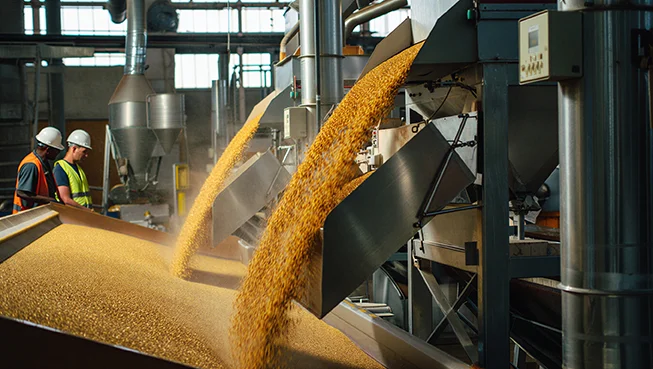
Food safety compliance has never been simple. Between federal regulations, third-party audits, HACCP documentation requirements, and the operational reality of managing raw and ready-to-eat product in the same facility, food manufacturers carry a compliance burden that touches nearly every corner of the production floor. For years, managing that burden meant a labor-intensive approach that still left gaps.
What’s changing isn’t the importance of compliance. It’s the tools available to enforce it.
Surveillance cameras, paired with purpose-built analytics and, increasingly, trainable AI, are becoming a core part of how food manufacturers document, verify, and continuously improve their safety practices. And the trend is accelerating not just in food processing, but across nearly every industry where compliance is non-negotiable and the cost of a failure is measured in more than dollars.
Compliance as a Daily Practice, Not an Audit Event
The most important shift happening in food safety right now isn’t technological, it’s cultural. The facilities that are managing compliance most effectively have stopped treating it as something that happens when an inspector arrives and started treating it as something that happens on every shift, at every station, with every employee.
That means safety tasks need to be observable, measurable, and documentable in real time. Hand washing before entering a production area. Proper glove use at packaging stations. Employees staying within their designated zones. Sanitation protocols followed raw and finished product handling. These aren’t occasional events to audit. They’re daily habits that determine whether a facility is truly compliant or just compliant on paper.
Camera systems placed near production lines give facilities a way to verify those habits continuously, not periodically. When a safety task is captured on camera with a timestamp, it becomes documentation. When that documentation is searchable and retrievable, it becomes an audit trail. When that audit trail is consistent and complete, it becomes a compliance asset, one that holds up under FDA review, third-party certification audits, and customer facility inspections alike.
What Production Cameras Are Actually Watching
It helps to be specific about where cameras are being deployed on the food production floor and what they’re capturing, because this is no longer just about monitoring who walks in the door.
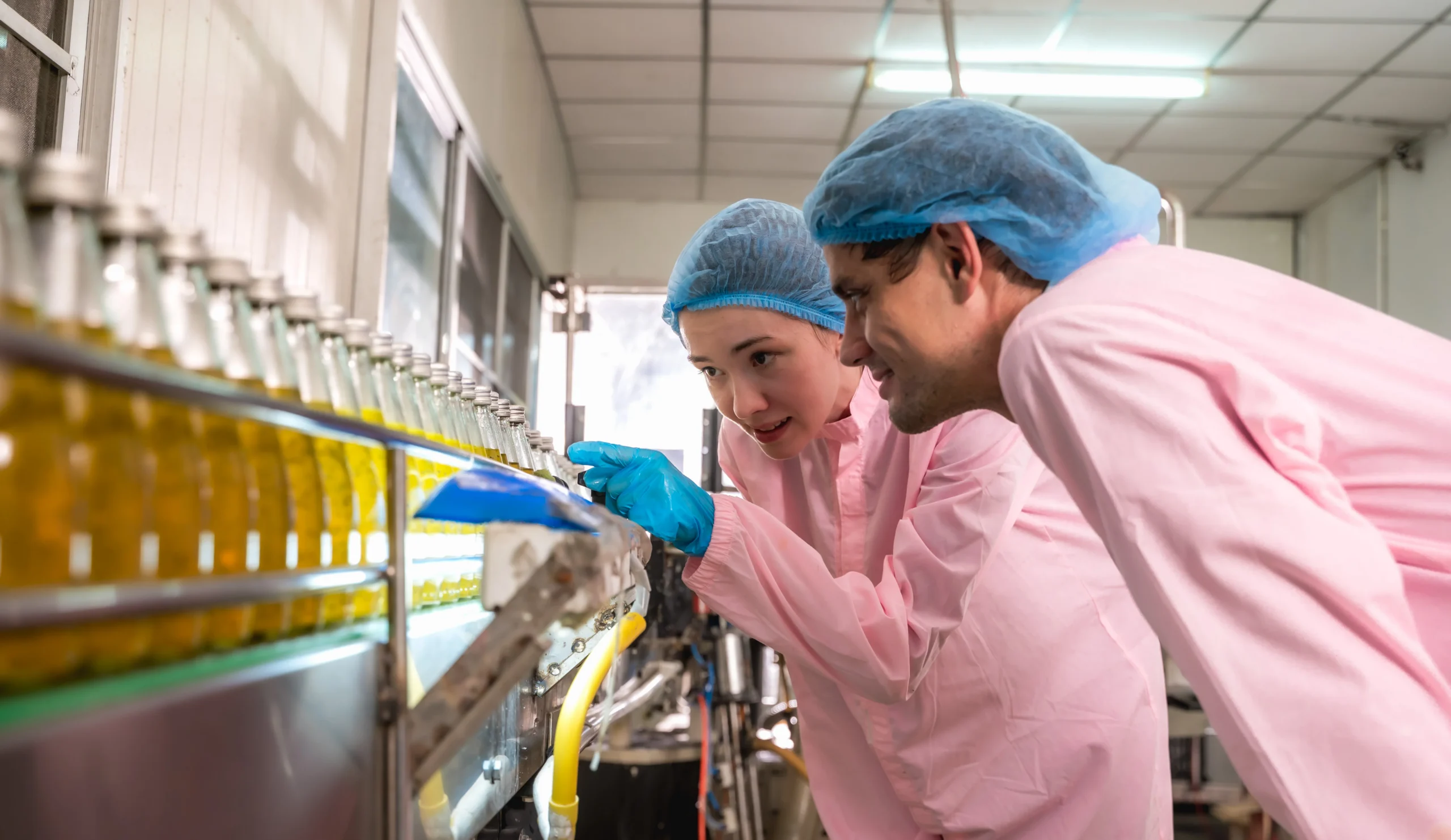
Handwashing and hygiene verification. Handwashing stations are one of the most fundamental control points in any food facility and one of the hardest to monitor manually without stationing someone at the sink. Cameras positioned at wash stations can verify that employees are completing the proper wash cycle before entering production areas, generating a timestamped record that documents compliance as a matter of routine rather than relying on self-reporting or supervisor observation.
Packaging inspection. On a high-speed production line, human inspection of every unit is simply not possible at scale. Cameras positioned at packaging stations can inspect products continuously, checking for seal integrity, label accuracy, foreign objects, fill levels, and other quality indicators that determine whether a product is fit to ship. When a defect is detected, the system flags it immediately rather than waiting for a downstream quality check to catch what slipped through.
Zone and area monitoring. Most food processing facilities operate with distinct areas carrying different contamination risks. Raw product areas where unprocessed meat, produce, or ingredients are handled must be kept separate from ready-to-eat areas where finished product is packaged and prepared for distribution. That separation is fundamental to food safety, and it’s enforced through physical barriers, protocols, and personnel training. Cameras add a layer of continuous verification to that separation, monitoring movement between areas and flagging when something doesn’t belong.
Uniform and color-coded compliance. Many facilities take zone separation a step further with color-coded uniforms or scrubs, a practical system where the color of an employee’s uniform indicates which areas they’re authorized to enter. For example, a raw product employee in blue, a ready-to-eat employee in white, or a maintenance technician in black. When the wrong color appears in the wrong area, it’s not just a policy issue, it’s a potential cross-contamination event. Camera systems can detect those mismatches and respond instantly. The response can be a security alert, a strobe light, a text to a supervisor, or a pre-recorded audio message directed at the employee and the area. The response is immediate, documented, and doesn’t require a manager to be watching the right monitor at the right moment.
Two Layers of Intelligence: Hard-Wired Analytics and Trainable AI
Here’s where it’s worth being precise about how these systems actually work because “AI camera” has become a catch-all phrase that obscures an important distinction.
Modern enterprise camera platforms come with built-in, hard-wired analytics that work out of the box. These are purpose-built detection capabilities embedded directly in the camera or the recording platform: motion detection, object detection, line crossing, area intrusion, loitering detection. These analytics are reliable, consistent, and don’t require training. They’re the foundation of a production monitoring system, and for many compliance applications they’re exactly what’s needed without any customization.
Layered on top of that foundation is the trainable AI, models that can be taught to recognize facility-specific behaviors, objects, and conditions that off-the-shelf analytics weren’t designed to detect. This is where uniform color recognition, hygiene protocol verification, and packaging-specific defect detection live. These models are trained on footage and data from your specific facility. This includes your uniforms, your equipment, your floor layout, and your products.
Axis cameras with built-in edge analytics provide the hardware foundation, processing detection at the camera level rather than sending everything to a central server. Milestone’s video management platform handles recording, storage, and retrieval at scale, creating the searchable, audit-ready footage archive that compliance documentation requires. Genetec and Hanwha round out the camera options for facilities with specific environmental or coverage requirements. These platforms provide facilities with a system that works reliably from day one and gets smarter as it learns the specific patterns and priorities of their operation.
Built for More Than Food Manufacturing
Food processing is where production floor camera compliance is most visible right now/ The regulatory stakes are high, the consequences of failure are public, and the operational complexity of managing multiple product types in a single facility creates exactly the kind of multi-variable compliance challenge these systems are designed to address.
But the underlying approach is spreading. Healthcare facilities are using production-style camera analytics to monitor hand hygiene compliance and infection control protocols. Pharmaceutical manufacturers are applying the same logic to clean room monitoring and PPE verification. Distribution and logistics operations are using camera-based analytics to enforce dock safety procedures and verify proper handling of sensitive shipments. Corporate campuses and industrial facilities of all kinds are deploying camera systems not just for security but for safety task verification, documenting that protocols are being followed as a matter of operational practice.
The common thread across all of these environments is the recognition that compliance can’t be a once-a-quarter exercise. It has to be something the facility can demonstrate is happening every day, on every shift, with every employee. Camera-based analytics, both the hard-wired capabilities and the trainable AI that builds on them, are how that demonstration becomes possible at scale.
Making Smart Upgrades in Production Processing Environments
For facilities considering this kind of upgrade, the conversation usually starts in one of two places: a compliance gap that surfaced during an audit, or a quality incident that made clear that manual monitoring wasn’t catching what it needed to catch. Either way, the path forward involves the same set of questions.
Where on the production floor are the highest risk compliance points with the most significant downstream consequences? Those are the right places to start.
What does the existing camera infrastructure look like, and what can be built on versus replaced? Many facilities have legacy camera systems that were installed for perimeter security and aren’t positioned or specified for production floor use. A smart upgrade doesn’t necessarily mean starting over. The first steps are understanding what you have, where the gaps are, and what combination of hardware, analytics, and integration gets you to genuine compliance documentation capability rather than just more footage.
And critically: how will the system connect to the people who need to act on what it detects? A camera that flags a zone violation is valuable. A camera that flags a zone violation and simultaneously sends a text to the shift supervisor, triggers an audio alert on the floor, and logs the event with a timestamp in a searchable record, that’s a compliance system.
The facilities getting the most out of these investments are the ones that approached the project that way from the beginning, thinking through the full picture from camera placement to analytics to alerting to documentation, rather than treating it as a camera installation with some software on top.
That’s what makes the difference between a system that checks a compliance box and one that actually changes how safety is practiced every day on the production floor.
Standardization for Multiple Locations
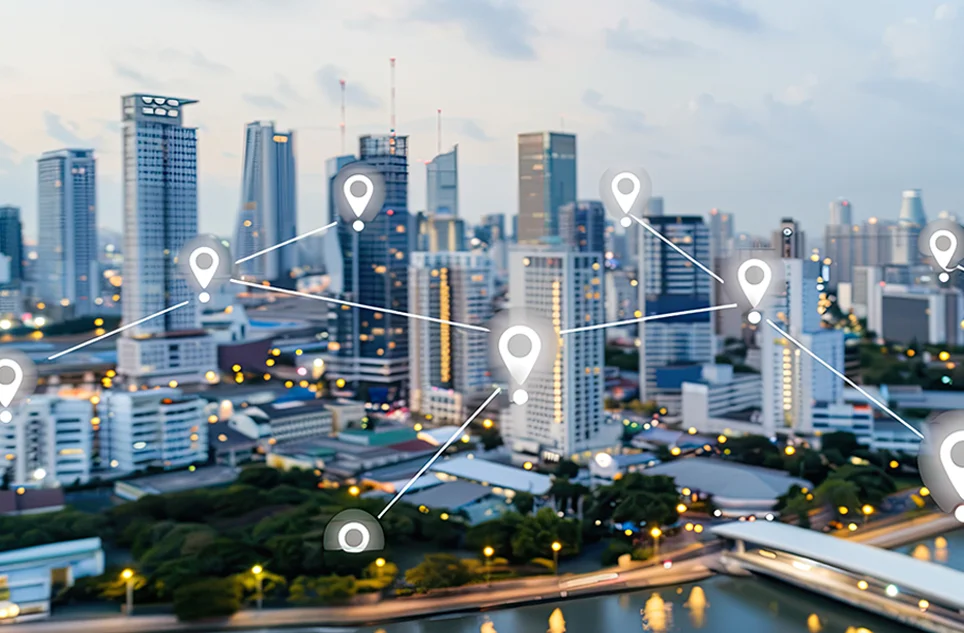
Healthcare systems that expand through acquisition face an accelerated version of this problem. A health system operating 12 specialty clinics across three states may have four access control platforms, two video management systems, and multiple alarm monitoring contracts. This siloed approach leads to separate contract negotiations, service-level agreements, and vendor management processes.
The operational and financial cost of that fragmentation is significant, but the risk is even greater. When a security event occurs at a medical building, the ability to quickly correlate video, access logs, and alert history can determine whether the response is effective or becomes only an after-the-fact investigation.
For any health system managing more than two or three outpatient locations, standardizing enterprise-grade platforms is foundational. That means using a single access control system, a unified video management system with centralized analytics, and an integrated mass notification solution. Standardization also simplifies vendor management, training, and technology refresh cycles.
Key Questions for Healthcare Security Decision-Makers
If you’re responsible for physical security across an outpatient or specialty care network, these are the most important questions to ask:
- Can your security systems be managed and monitored centrally across all locations from a single platform or are your teams logging into separate systems for each site?
- Do all of your medical buildings have the same level of access control and video coverage as your main hospital campus, or have smaller buildings been treated as lower priority?
- Are your video analytics detecting patient falls, flagging after-hours activity, identifying tailgating at restricted entry points or are they reactive, passive recording devices?
- How long does it take to start a facility-wide emergency alert at one of your outpatient locations, and does that process depend on a trained individual being physically present?
- Do your new construction projects include security in the design phase, or is security infrastructure specified after architectural systems have already been designed?
- Is your alarm monitoring integrated with your access control and video systems, or do your monitoring center staff see events without the context to respond to them intelligently?
Planning for Healthy Hospital Expansion
The face of healthcare security is changing because healthcare itself has changed. The old model of a single large hospital building no longer reflects where patients, staff, and revenue are located. Health systems that get this right are not simply buying more cameras or door readers. They are treating security as enterprise infrastructure: one platform, one set of standards, and one source of truth across every site.
Done well, this shift pays off in three concrete ways. It saves money by replacing redundant vendor contracts and one-off installations with standardized systems that are easier to license, maintain, and scale. It saves time by giving security and facilities teams a single dashboard instead of a dozen logins, turning multi-hour investigations into five-minute lookups and new-facility security buildouts into repeatable processes. Most importantly, it helps save lives by closing the response gap at facilities without a security team down the hall, detecting patient falls, medical emergencies, or escalating behavioral health crises as they happen rather than after the fact.
For facility managers, IT executives, and directors of security building the next generation of outpatient and specialty care facilities, that is the real measure of success: not whether cameras are recording, but whether the system as a whole is fast enough, smart enough, and connected enough to protect people in buildings that no longer have the staffing or space of a traditional hospital.
Data Link specializes in enterprise physical security integration for healthcare systems, including access control, video surveillance, mass notification, and door hardware for healthcare, education, manufacturing, and commercial facilities. If you are evaluating security infrastructure for new construction or working to standardize existing facilities, let’s schedule a security assessment.