 24/7 SUPPORT
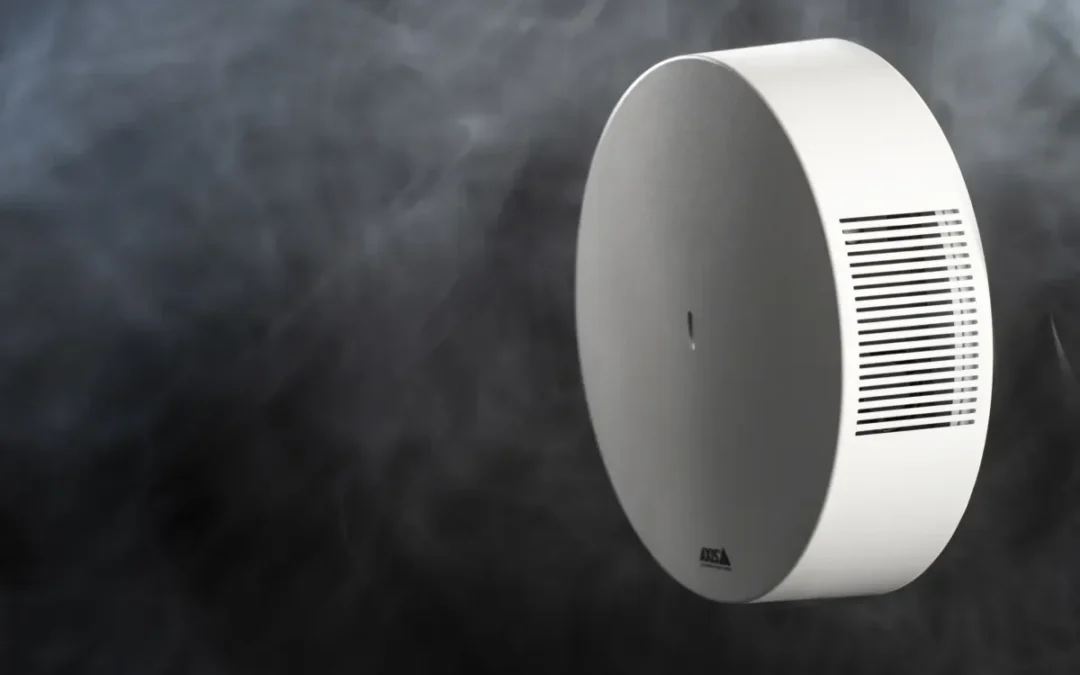
Photo courtesy of Axis Communications
When most people think about physical security, they picture surveillance cameras and access control panels. And they’re not wrong, those are foundational. But if you’re a Facility Manager or IT Director in manufacturing, food processing, healthcare, or education, you know that the threats to your people, your operations, and your regulatory standing aren’t always visible to a lens. Sometimes they’re invisible, drifting through the air as a gas, a chemical compound, or an airborne pathogen.
Environmental sensors are changing that. In the last few years, there’s been a substantial increase in the environmental monitoring market, with indoor air quality as the fastest growing sub-segment. Nearly 45% of corporate offices now deploy indoor air monitoring systems for employee health. Poor indoor air quality can negatively impact workplace productivity and cognitive function. A recent report showed that over 60% of Class A office towers installed real-time indoor air quality systems. The healthcare and industrial/manufacturing sectors aren’t far behind, becoming part of the infrastructure due to ESG pressure, employee wellness priorities, falling sensor costs and tighter federal regulations.
At Data Link, we’ve been integrating more and more sensor technology from our vendors Axis Communications and HALO Smart Sensor into comprehensive security ecosystems for complex, multi-facility organizations. What we’re seeing is a fundamental shift: environmental monitoring is no longer a separate safety department function. It’s part of the unified security and compliance strategy.
Here’s what that means in practice by industry.
The Convergence of Physical Security and Environmental Monitoring
Let’s address the architecture first, because this is where enterprise security leaders often get stuck. Environmental sensors don’t need to live on an island. The best implementations integrate directly with your existing video management system (VMS), giving security operations teams a single pane of glass for both visual and environmental threat detection.
Axis Communications has built this integration into the DNA of its environmental sensor lineup. Their air quality sensors connect natively with Axis IP cameras and the broader Axis ecosystem. When an air quality event triggers an alert, whether that’s a spike in volatile organic compounds, a surge in CO2, or detection of vaping chemicals, your video management system can automatically pull up the nearest camera feed so security personnel can immediately assess and respond. No switching platforms. No hunting for context.
The HALO Smart Sensor takes a complementary approach, particularly for spaces where cameras simply cannot go: restrooms, locker rooms, and other privacy-sensitive areas. HALO integrates with your existing security infrastructure through open APIs, enabling real-time alerts to flow directly into your security management dashboard. HALO Cloud, the platform’s analytics layer, lets multi-site organizations monitor environmental and safety events across every facility from a single interface, with heat maps, trend reports, and location-specific incident logs.
Manufacturing: Gas Monitoring, Oxygen Levels, and Worker Safety
Manufacturing environments carry an air quality burden that most office-based security professionals can’t imagine. Depending on what your facility produces, your workforce could be exposed to hazardous gas accumulation, oxygen-deficient atmospheres, or airborne particulates. The difference between a near-miss and a fatality is often early detection.
OSHA regulations establish permissible exposure limits (PELs) for hundreds of airborne contaminants. Compliance isn’t optional, and enforcement is active. What is optional, and increasingly a differentiator for safety-forward manufacturers, is how proactively you detect and respond before those limits are breached.
We install Axis environmental sensors to help monitor critical indoor air quality parameters including particulate matter (PM), nitrogen oxides (NOx), volatile organic compounds (VOCs), carbon dioxide (CO2), temperature, and relative humidity. In a controlled manufacturing environment where these parameters directly impact both worker health and production quality, that’s a meaningful layer of operational intelligence. Real-time data feeds into HVAC management, helping facilities maintain precise environmental conditions while reducing energy waste.
HALO Smart Sensor rounds out the manufacturing use case with chemical detection capabilities that extend to carbon monoxide (CO) and ammonia (NH3), two gases that pose acute risks in industrial settings. The HALO platform’s multi-sensor architecture, built with airflow optimization in mind, is designed to detect chemical changes quickly and accurately, even in large, open manufacturing floor environments.
For tobacco manufacturing facilities operating across multiple locations, a sector with its own complex regulatory requirements around air quality and worker exposure, multi-site deployment is a non-negotiable capability. HALO Cloud’s multi-location management platform and Axis’s scalable IP architecture both support consistent environmental monitoring standards across geographically dispersed plants. That means your environmental compliance posture is uniform whether your facility is in North Carolina, Virginia, or Kentucky. Your security team can see the same data, respond to the same alert thresholds, and pull consistent compliance documentation.
Food Processing: Freezers, Boiler Rooms, and the Ammonia Problem
Food processing is, arguably, where environmental sensor integration is most urgently needed and most under deployed. The operational environments are extreme, freezer corridors that hover near zero degrees, boiler rooms with fluctuating temperature and humidity, and refrigeration systems that depend on anhydrous ammonia as a refrigerant. Each of those environments presents a distinct set of hazards, and each carries regulatory teeth.
The ammonia issue deserves specific attention. Anhydrous ammonia is one of the most widely used refrigerants in large-scale food processing and cold storage. It’s also highly toxic. OSHA’s Process Safety Management standard applies to facilities holding 10,000 pounds or more of ammonia, requiring comprehensive process safety programs, mechanical integrity inspections, and emergency response planning. OSHA also demands that ammonia detection systems must trigger alarms at a concentration of 25 ppm or higher reported to a monitored location so corrective action can be taken.
Sensor-based ammonia detection isn’t just best practice. At threshold quantities, it’s a federal requirement.
HALO Smart Sensor detects ammonia (NH3) as part of its chemical monitoring capability, providing real-time alerts that can be routed to your security operations center, facility managers, and emergency response teams simultaneously. When integrated with your VMS, a detected ammonia spike in a freezer room can automatically trigger camera feeds covering adjacent corridors, access control lockouts to the affected zone, and automated notifications, all without an employee having to connect the dots.
Boiler rooms present a different challenge: temperature extremes, steam, and air quality degradation from combustion byproducts. Axis environmental sensors monitor temperature, humidity, and VOC levels in these environments, parameters that matter both for regulatory compliance and for equipment longevity. Catching an HVAC or boiler anomaly through environmental data before it becomes a human safety event is exactly the kind of operational intelligence that separates reactive safety programs from proactive ones.
Beyond the regulatory floor, food processing facilities that can demonstrate continuous, documented environmental monitoring have a distinct advantage during FDA and OSHA inspections. Both Axis and HALO platforms generate the logs, reports, and audit trails that turn your sensor data into compliance documentation.
Healthcare: Infectious Control, Air Quality, and the Invisible Threat
Healthcare security leaders operate in a unique environment where physical security and patient safety are inseparable. The COVID-19 pandemic made this vivid in ways that few previously anticipated. Airborne pathogen transmission in infectious control areas, isolation rooms, negative pressure zones, oncology suites, is a clinical and operational concern that intersects directly with your security infrastructure.
Air quality monitoring for infection control is increasingly recognized as a component of a comprehensive healthcare safety strategy. The Joint Commission’s environment of care standards and CDC guidelines on environmental infection control both speak to the importance of monitoring ventilation and air quality in clinical spaces. Axis environmental sensors can support compliance with indoor air quality regulations, providing continuous measurement of CO2, particulate matter, humidity, and temperature, parameters that directly relate to ventilation effectiveness and airborne contaminant control.
For clinical areas where patients are immunocompromised or where airborne transmission risk is elevated, real-time IAQ monitoring provides early warning when ventilation performance degrades. Integrated with your VMS, an IAQ alert in an isolation wing can trigger immediate notification to facilities management and clinical leadership, without requiring anyone to walk a floor or manually check a gauge.
HALO Smart Sensor is particularly well-suited for the unique geography of healthcare security. Patient rooms, restrooms, and staff locker rooms are spaces where privacy requirements prevent camera installation, but where safety monitoring remains essential. HALO’s camera-free design means it can be deployed throughout a hospital campus, including sensitive clinical areas, providing air quality monitoring, chemical detection, and safety alerting without capturing any personally identifiable information. For a healthcare organization balancing HIPAA obligations with environmental safety requirements, that’s a meaningful distinction.
HALO also has a really smart feature that detects emergency keywords, a capability with obvious value in clinical settings where a patient or staff member in distress may call for help in a space without camera coverage. Combined with environmental monitoring, the sensor becomes a comprehensive safety layer for the entire facility footprint.
Education: Locker Rooms, Bathrooms, and the Vaping Crisis
Let’s call it what it is: student vaping has become an epidemic in U.S. schools. School administrators are caught between the need to protect students and the legal and ethical restrictions that prevent camera installation in bathrooms and locker rooms. It’s a genuine gap in school security coverage.
HALO detects vaping chemicals, including nicotine and THC, in real time. It identifies not just the act of vaping but also vape-masking attempts, a common workaround students use. Because HALO is a camera-free device that neither records video nor captures audio, it can be legally installed in bathrooms, locker rooms, and other privacy-protected spaces. It’s currently deployed in schools across the United States, where it has identified both nicotine vaping and THC use in facilities where administrators previously had no visibility. At four Minneapolis school campuses with vape-detection sensors, devices triggered over 45,000 times between September 2024 and April 2025.
For school districts navigating state tobacco-free campus policies and federal substance-free school requirements under the Safe and Drug-Free Schools framework, HALO provides both detection capability and the documentation trail that matters when disciplinary or legal action is required.
Axis’ air quality sensors offer a complementary layer for educational facilities, monitoring CO2 levels in classrooms (which directly impact student cognitive performance and alertness), particulate matter in high-traffic areas, and humidity in gymnasiums and auxiliary spaces. Axis has specifically noted that student vaping has reached epidemic levels in schools, and their sensor lineup is designed to support administrators in addressing it without compromising student privacy.
For larger school districts operating multiple campuses both the Axis and HALO platforms support multi-location deployment and centralized monitoring. District-level security administrators can manage sensor data, configure alert thresholds, and access compliance reports across every campus from a single dashboard.

The Regulatory Landscape: What Security Leaders Need to Know
Environmental sensor compliance isn’t just a safety conversation; it’s a legal one. Here’s a consolidated view of the federal regulatory framework that applies across the industries we’ve covered:
OSHA (Occupational Safety and Health Administration) sets and enforces permissible exposure limits for airborne hazardous substances. The Process Safety Management standard applies specifically to facilities handling highly hazardous chemicals including ammonia above threshold quantities. OSHA’s General Duty Clause creates a broader obligation to protect workers from recognized hazards, including those detectable through environmental monitoring.
EPA regulations under the Clean Air Act and Risk Management Program (RMP) require facilities that store threshold quantities of regulated substances, ammonia included, to develop and implement risk management programs that include detection and emergency response components.
ANSI/IIAR standards (particularly IIAR 2-2021 and IIAR 9-2020) govern ammonia refrigeration system design, operation, and safety, including specific requirements for ammonia detector placement, alarm levels, calibration intervals, and functional testing documentation.
The Joint Commission and CMS Conditions of Participation establish environment of care requirements for healthcare facilities that encompass air quality and ventilation monitoring in clinical spaces.
CDC Environmental Infection Control Guidelines provide detailed recommendations for HVAC performance monitoring and air quality management in healthcare settings, areas where sensor data provides direct compliance documentation value.
The common thread across all of these frameworks is documentation. Regulators don’t just want to know that you have a detection system, they want to see evidence that it’s functioning, calibrated, and generating actionable data. Both Axis and HALO platforms produce the logs, reports, and audit trails that turn real-time monitoring into compliance currency.
What a Modern Environmental Security Deployment Looks Like
When Data Link approaches an environmental sensor integration, we’re not recommending a standalone product. We’re designing a system. That means understanding the specific hazards, regulatory requirements, and operational priorities of each facility, and then selecting and configuring sensors that address them within your existing security infrastructure.
For a multi-site food processing operation, that might mean HALO sensors in every freezer corridor and ammonia-risk area, integrated with Axis cameras at adjacent access points and connected to a central VMS, with automated alert routing to both security and facilities teams.
For a regional healthcare system, it might mean Axis sensors in clinical support areas and staff spaces, HALO devices in patient restrooms and locker rooms, and a unified dashboard that gives the security operations center visibility across the entire campus footprint.
For a manufacturing plant with a tobacco processing line, it could mean gas-level monitoring throughout the production floor, temperature and air quality tracking in boiler and HVAC rooms, and multi-location reporting that gives corporate safety leadership consistent data from every facility in the network.
The right answer is always specific to your environment. The right question to start with is: what are you currently unable to see, and what would it mean for your people, your operations, and your compliance if you could see it?
The Bottom Line
Environmental sensors are not a niche technology or an emerging experiment. They are a mature, integrable layer of enterprise security infrastructure, one that addresses regulatory requirements, protects workers, and fills the visibility gaps that cameras simply cannot reach.
If you’re a security decision-maker in manufacturing, food processing, healthcare, or education, the conversation isn’t whether to add environmental monitoring to your security strategy. It’s when and how to do it right.
Data Link specializes in enterprise-scale physical security design and deployment across complex, multi-site environments. We work with Axis, HALO, and the full range of leading security technology vendors to build integrated security solutions that protect your people, support your compliance obligations, and give your security team the complete situational awareness they need.
Ready to assess your environmental monitoring gaps? Let’s chat.